
XRifle Dynamic RIS FR3
7.125–8.4 GHz Reconfigurable Intelligent Surface for 6G FR3 Research
Enable programmable RF reflection for beamforming, OTA channel sounding, and 6G research.
What is XRifle Dynamic RIS FR3?

FR3 Reconfigurable Surface
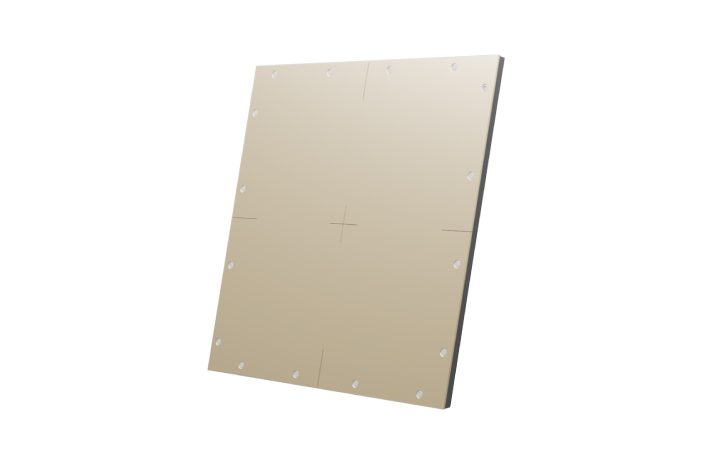
A 16 × 16 PIN-diode RIS with 256 elements, covering 7.125–8.4 GHz for programmable RF reflection in FR3 research.
Learn more1-Bit Phase Control
1-bit phase control with 0° / 180° states enables dynamic RF path control for channel and propagation experiments.
Learn moreBuilt for FR3 Research
Designed for beamforming validation, OTA channel research, NLoS experiments, ISAC, and other emerging 6G research scenarios.
Learn moreWhy Choose XRifle Dynamic RIS FR3?
FR3 Upper Mid-Band Coverage
Operates across 7.125–8.4 GHz, supporting 6G FR3 research from OTA channel sounding to propagation measurement.
256-Element RIS Architecture
A 16 × 16 PIN-diode array provides 256 elements with 1-bit 0° / 180° phase control for programmable RF reflection.
Wide-Angle RIS Operation
Supports incident and reflection angles of up to ±60° in both horizontal and vertical directions, enabling flexible RF path control.
Existing XRifle Control Stack
Reuses TMYTEK’s existing XRifle controller board and TLKCore API to simplify integration into FR3 research workflows.
Key Features
- Frequency range: 7.125–8.4 GHz FR3 Upper Mid-Band
- Surface Architecture: 16 × 16 PIN-diode array with 256 elements
- Phase Control: 1-bit phase states: 0° / 180°
- Angular Range: ±60° incident and reflection angles, horizontal and vertical
- Control & API: 10/100 Mbps Ethernet (RJ-45) / Single controller handles up to 4 tiles
- Cabling-Free RF Path: XRifle controller architecture with TLKCore API and 10/100 Mbps Ethernet
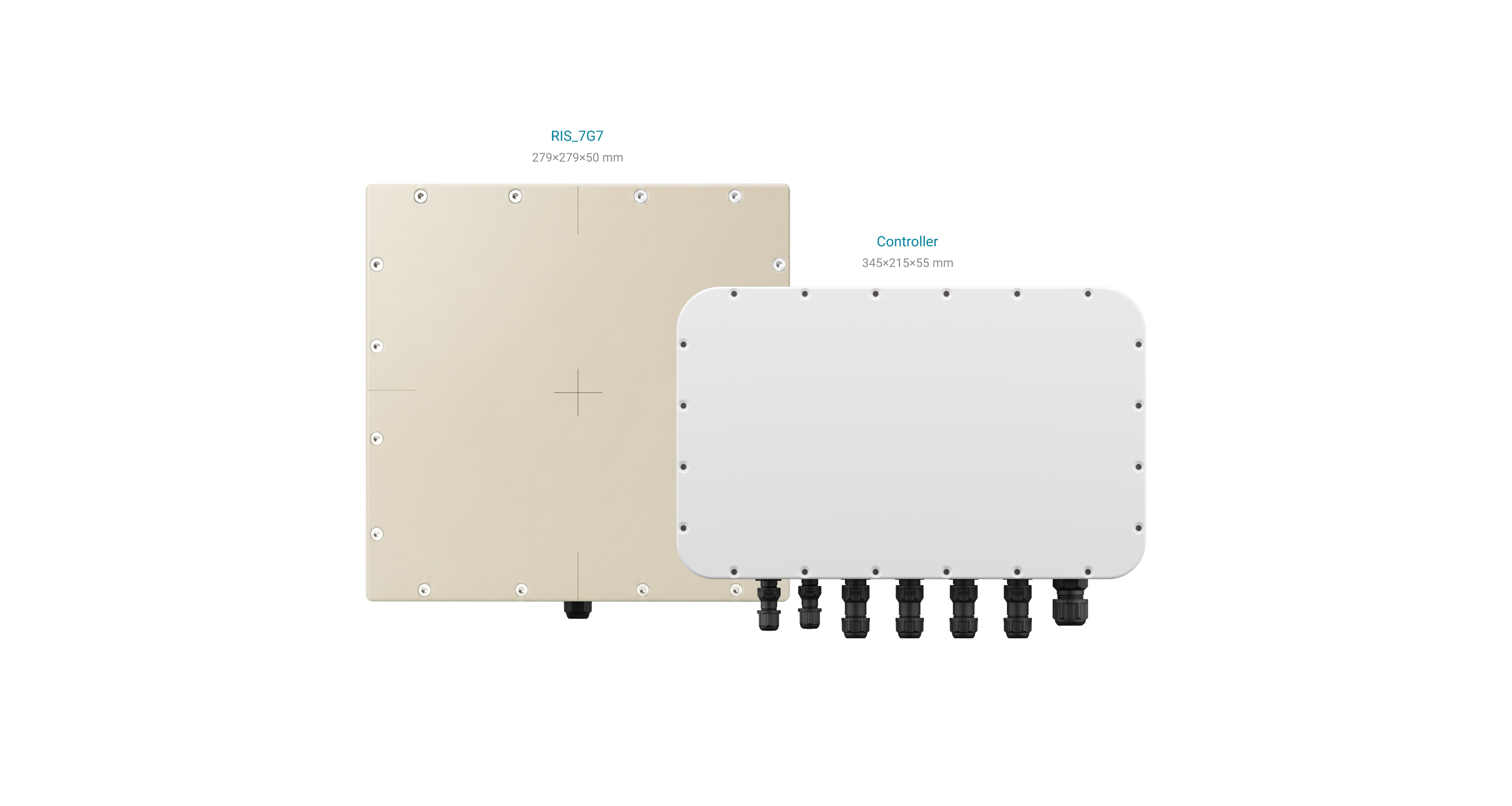
Dimensions
XRifle Dynamic RIS Specs
| Parameter | Unit | 7.7 GHz RIS | 3.5 GHz RIS | 4.7 GHz RIS | 28 GHz RIS |
|---|---|---|---|---|---|
| Frequency Range | GHz | 7.125-8.4 | 3.35-3.6 | 4.2-5.2 | 26-30 |
| Polarization | - | Linear | Linear | Linear | Linear |
| Size of Matrix | - | 16×16(256) | 10×10 | 16×16 | 32×32 |
| Element Pitch | mm | = 17.5 | - | - | - |
| Phase States | - | 1-bit, 0° / 180° | - | - | - |
| Angle of Incidence | deg | ±60 | ±60 | ±60 | ±60 |
| Angle of Reflection | deg | ±60 | ±60 | ±60 | ±60 |
| RCS Gain @Inc.0 | dB | 45-50 | 35-38 | 44.6-46.7 | 48.2-56.2 |
| 3 dB Beamwidth @Inc.0 | deg | 6-13 | 10-18 | 5.2-13.2 | 3.6-6.6 |
| Distance from Transmitter | cm | > 65 | > 90 | > 90 | > 51 |
| Array Antenna Size | mm | 280×280 | 42.8×43.1 | 42.8×43.1 | 16.9×17.1 |
| RIS Size | cm | - | 42.8×43.1 | 42.8×43.1 | 16.9×17.1 |
| Power Consumption | W | 11 | 5 | 5 | 20 |
| Supply Voltage | Vdc | 12 | 12 | 12 | 12 |
| Dimension | cm | 27.9×27.9×5 | 51×51×5.7 | 51×51×5.7 | 26.7×26.7×5.7 |
Controller Specs
| Parameter | Unit | 7.7 GHz RIS | 3.5 GHz RIS | 4.7 GHz RIS | 28 GHz RIS |
|---|---|---|---|---|---|
| Control Interface | - | 10/100 Mbps Ethernet | 10/100 Mbps Ethernet | 10/100 Mbps Ethernet | 10/100 Mbps Ethernet |
| Pattern Switching Time | ms | 5 | TBC | TBC | TBC |
| Power Consumption (Single RIS Unit) | W | 11 | 8 | 10.5 | 24 |
| Power Consumption (4 RIS Units) | W | ? | 14 | 24 | 78 |
| Supply Voltage | Vdc | 12 | 12 | 12 | 12 |
| Dimension | mm | 345x215x55 | 345x215x55 | 345x215x55 | 345x215x55 |
| Weight | kg | 2 | 2 | 2 | 2 |
| VESA Mount Standard | mm | 100x100 | 100x100 | 100x100 | 100x100 |
Scalable RIS Architecture for FR3 Research
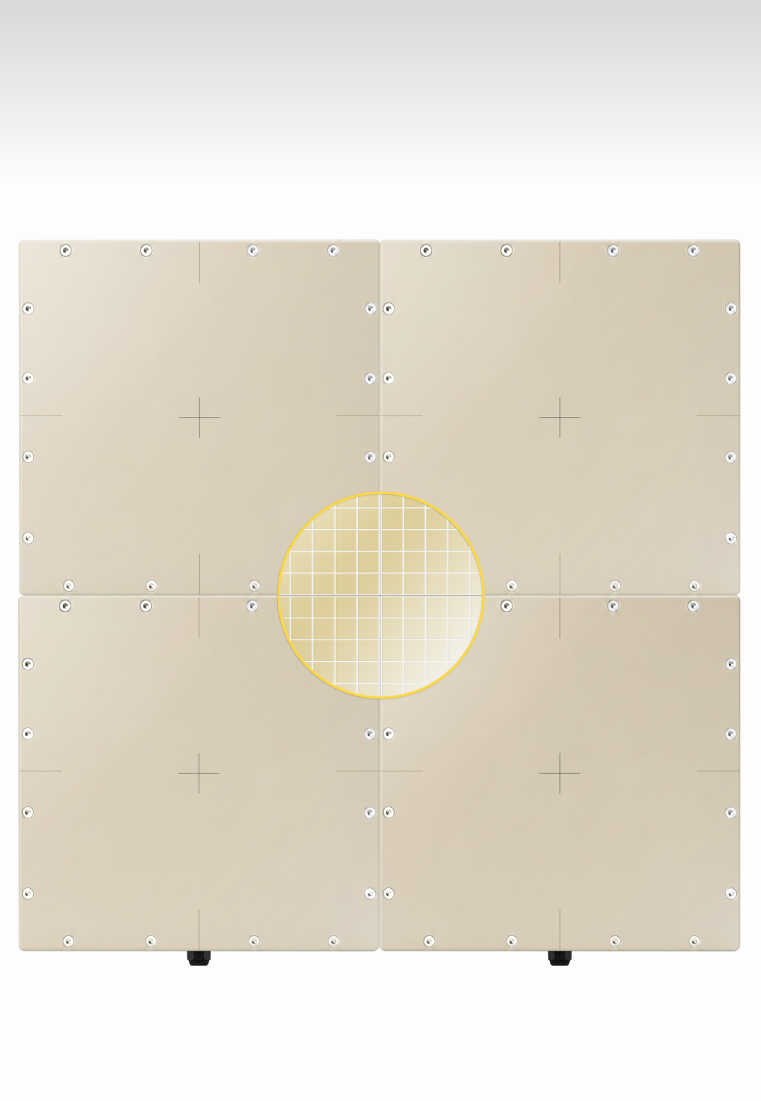
XRifle Dynamic RIS FR3 features a thin-bezel 16 × 16-element module architecture designed for scalable RIS configurations. Multiple modules can be arranged to create larger reflective surfaces for FR3 experiments and OTA research setups.
256-Element RIS
Features a 16 × 16 PIN-diode array with 256 elements for programmable 1-bit 0° / 180° phase control.
±60° Angular Coverage
Supports incident and reflection angles up to ±60° in both horizontal and vertical directions.
Scalable FR3 Configuration
Thin-bezel modules support scalable configurations for larger FR3 research surfaces.
Complete 6G FR3 OTA Research Setup
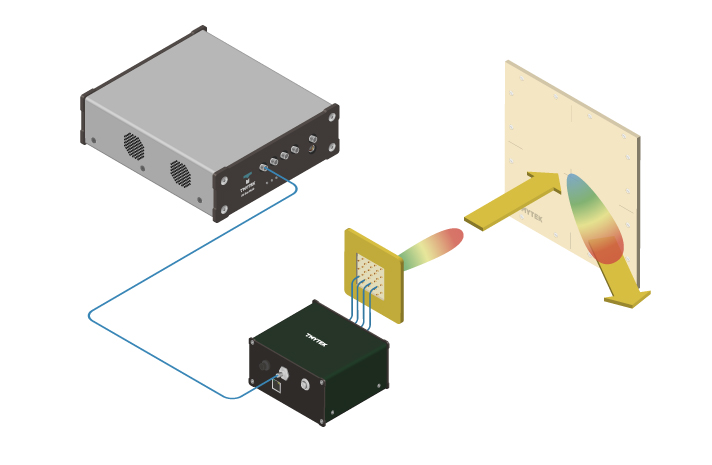
Combine XRifle Dynamic RIS FR3 with TMYTEK’s FR3 ecosystem to build end-to-end OTA research setups for beamforming, channel sounding, propagation research, and ISAC.
Ecosystem Components:
- Baseband & Processing — SDR / USRP Your existing Sub-6 GHz SDR / USRP platform.
- Up/Down Converter — UD Box 0630 Extends Sub-6 GHz signals into the FR3 frequency range.
- Beam Control — BBox Lite FR3 Electronically controlled FR3 beamforming
- Programmable Reflective Surface — XRifle Dynamic RIS FR3 Configurable RF reflection and propagation
Flexible RIS Control & API Integration
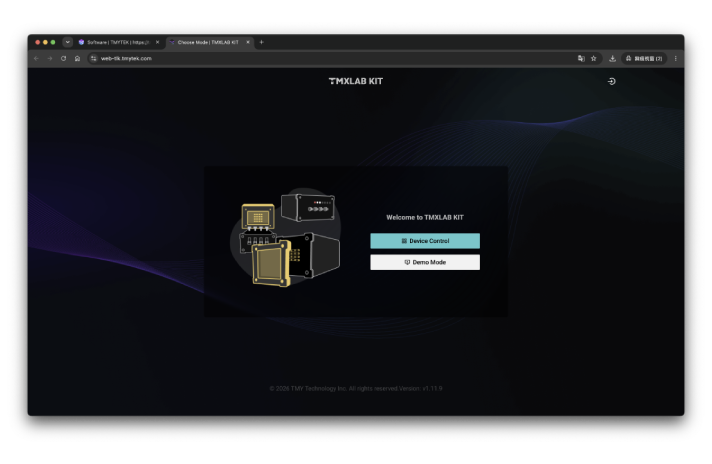
XRifle Dynamic RIS FR3 reuses TMYTEK’s existing XRifle SPI controller board and TLKCore API. The controller provides 10/100 Mbps Ethernet connectivity, enabling software-based RIS configuration and integration into existing XRifle research workflows.
- 10/100 Mbps Ethernet controller interface
- Existing XRifle SPI controller architecture
- TLKCore API integration
6G FR3 Application Scenarios
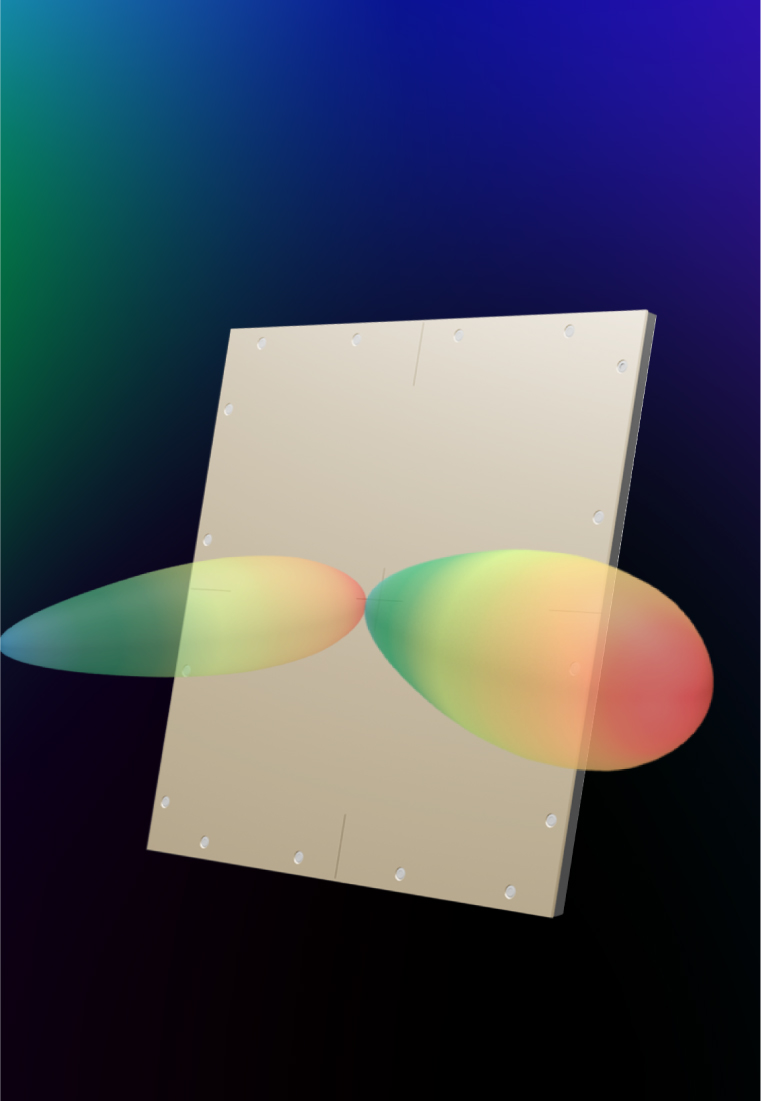 RIS Beamforming Validation
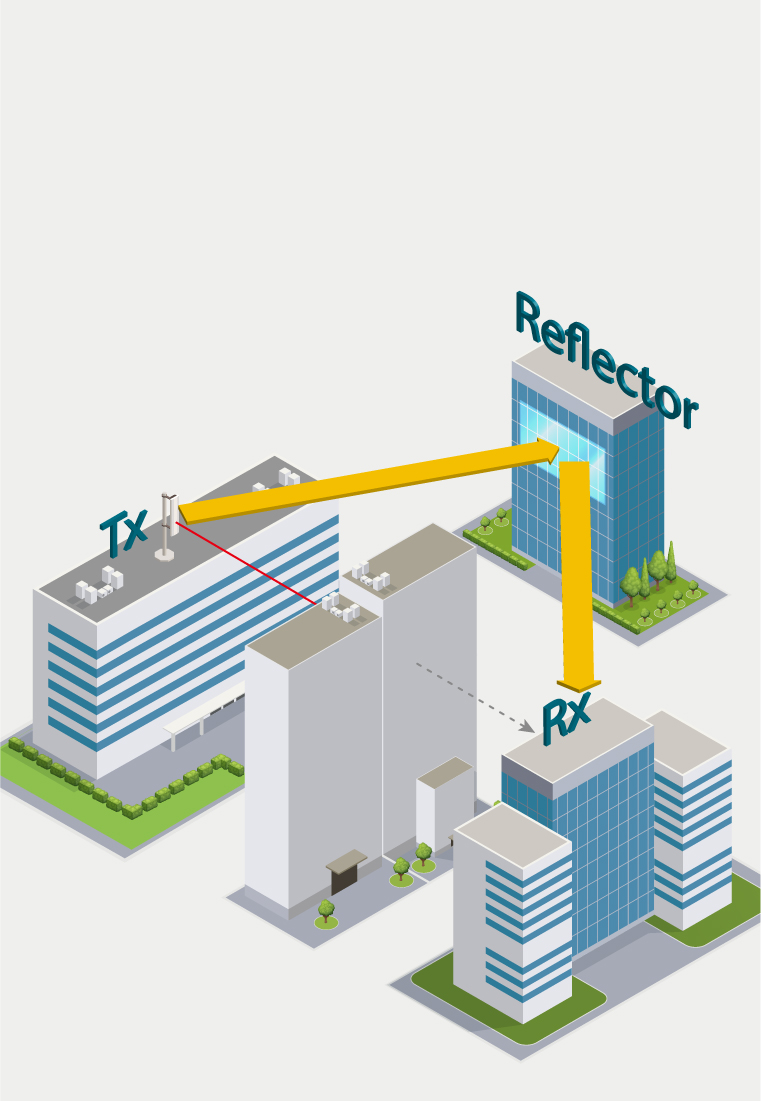 NLoS Channel Control
 ISAC Research
 FR3 Channel Sounding & Propagation Research
FAQ
Talk to Expert.
We’re here to help you find the best solution for your project.