A 12-Year Bet on mmWave: How TMYTEK Turned Technical Challenges into Competitive Barriers and Broke into Global Supply Chains with “LEGO-Like” Phased-Array Modules
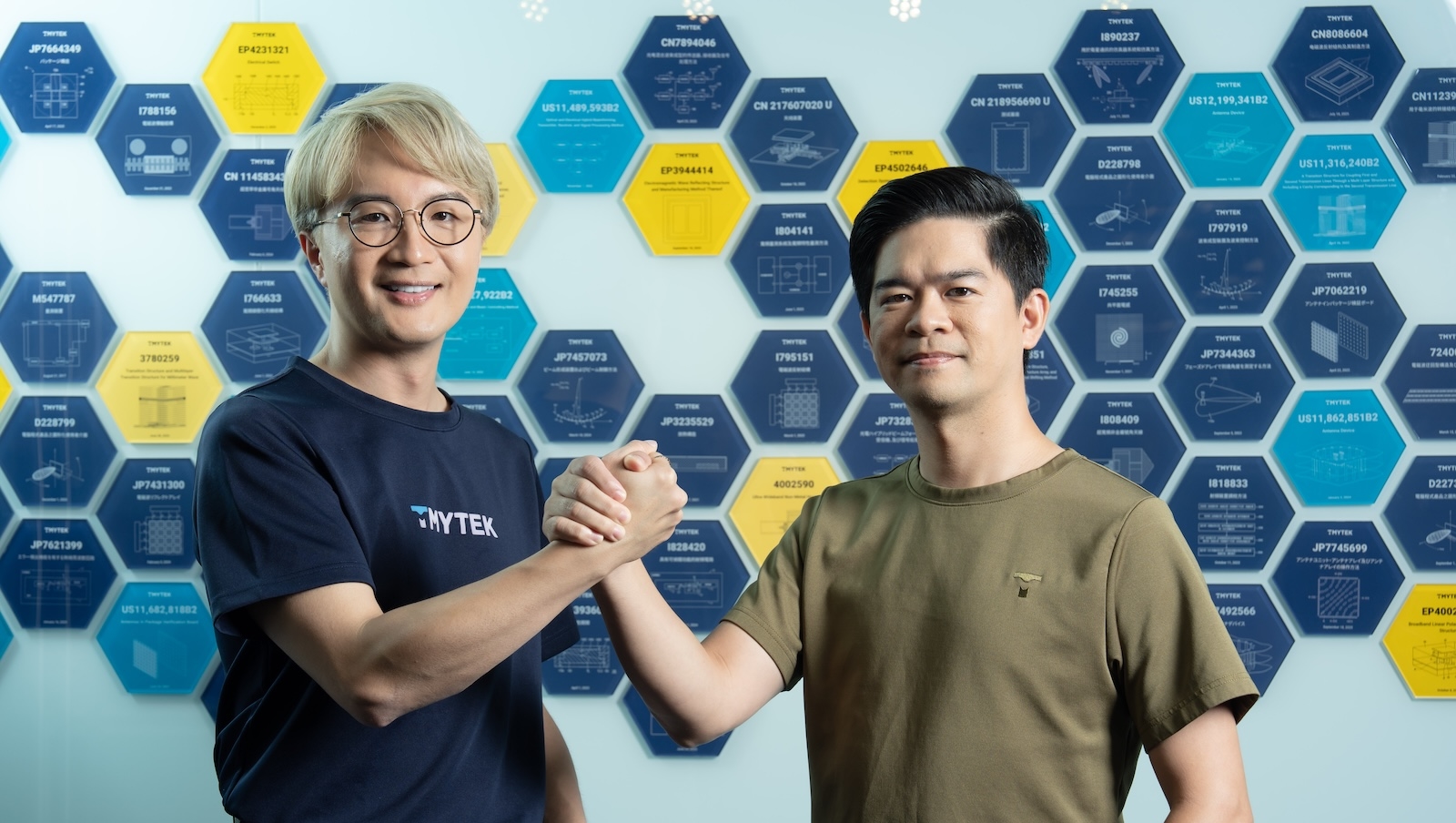
AI is driving explosive growth in data traffic. From 5G and 6G to satellite communications, governments and enterprises worldwide are searching for more bandwidth.
“Data is like cars, and bandwidth is like a highway,” says Su-Wei Chang, founder and chairman of TMYTEK. As existing roads become increasingly congested, communications inevitably need to move into higher-frequency spectrum to open up new lanes—and millimeter wave, or mmWave, is one of them.
The challenge is that the higher the frequency, the harder it becomes for signals to travel long distances. Phased-array antennas are therefore required to concentrate RF energy and precisely steer signals in specific directions. Once used primarily in military and aerospace applications, phased-array technology is now moving toward broader commercialization as demand grows across 6G, satellite communications, and resilient defense networks.
“If something is easy, there is usually little room for us to create an advantage,” Chang says. “After 12 years of building this company, I believe even more strongly that technologies requiring years of accumulated expertise are the ones most likely to become true competitive advantages.”
Today, more than 90% of TMYTEK’s revenue comes from overseas markets, and the company is preparing to list on the Taiwan Innovation Board. Its next step is to build on its established mmWave test-and-measurement business while accelerating the scale-up of its phased-array modules across three major markets: 5G/6G, defense, and multi-orbit satellite communications.
Challenge One: How Do You Survive Before the Market Arrives?
When TMYTEK was founded in 2014, mmWave technology was still far from large-scale commercial adoption.
Chang, who previously worked as a millimeter-wave engineer at the Academia Sinica Institute of Astronomy and Astrophysics, nevertheless believed that high-frequency communications would eventually become mainstream. “We knew high-frequency communications would become a major trend. We just didn’t know when it would happen.”
The challenge was not simply developing the technology, but building the capabilities—and staying in the game long enough—for the market to finally arrive.
Chang divides TMYTEK’s 12-year journey into three four-year stages. During the first four years, the company focused on engineering projects and custom development. In the second four years, it developed research and test equipment. In the third four years, it expanded further into phased-array modules.
Each stage added another layer of capability: its test and measurement products established a solid position in the global R&D and validation market, while antenna modules emerged as the company’s second growth engine.

Around 2018, 5G began bringing mmWave into mobile communications, and TMYTEK launched research platforms such as BBox. But it took six months to sell the first system, and Chang at one point considered giving up.
An investor challenged him with a simple question: “Have you really proven that it can’t sell?”
The team went back to the market—and discovered that what BBox truly saved customers was time. Experimental platforms that previously required months or even years of integration could now be deployed and used much more quickly.
That realization changed the trajectory of the business. BBox has since been sold in more than 34 countries, helping TMYTEK transition from a project-based engineering company into a product-driven business.
Today, instruments such as BBox and UD Box remain the foundation of TMYTEK’s presence in the global R&D market, while phased-array modules are opening the door to volume-production opportunities.
Challenge Two: Turning Phased Arrays into “LEGO”—From Prototype to Volume Production
As TMYTEK moved deeper into phased-array modules, the central question changed from “Can we build it?” to “Can we build it reliably and at scale?”
Historically, phased arrays have been expensive and highly customized, making large-scale commercialization difficult. If every application requires a completely new design, even a large number of orders still results in a high-mix, low-volume business.
TMYTEK therefore developed CloverCell, using AiP (Antenna-in-Package) and advanced packaging technologies to bring phased arrays into a more semiconductor-like, standardized, and scalable modular architecture.
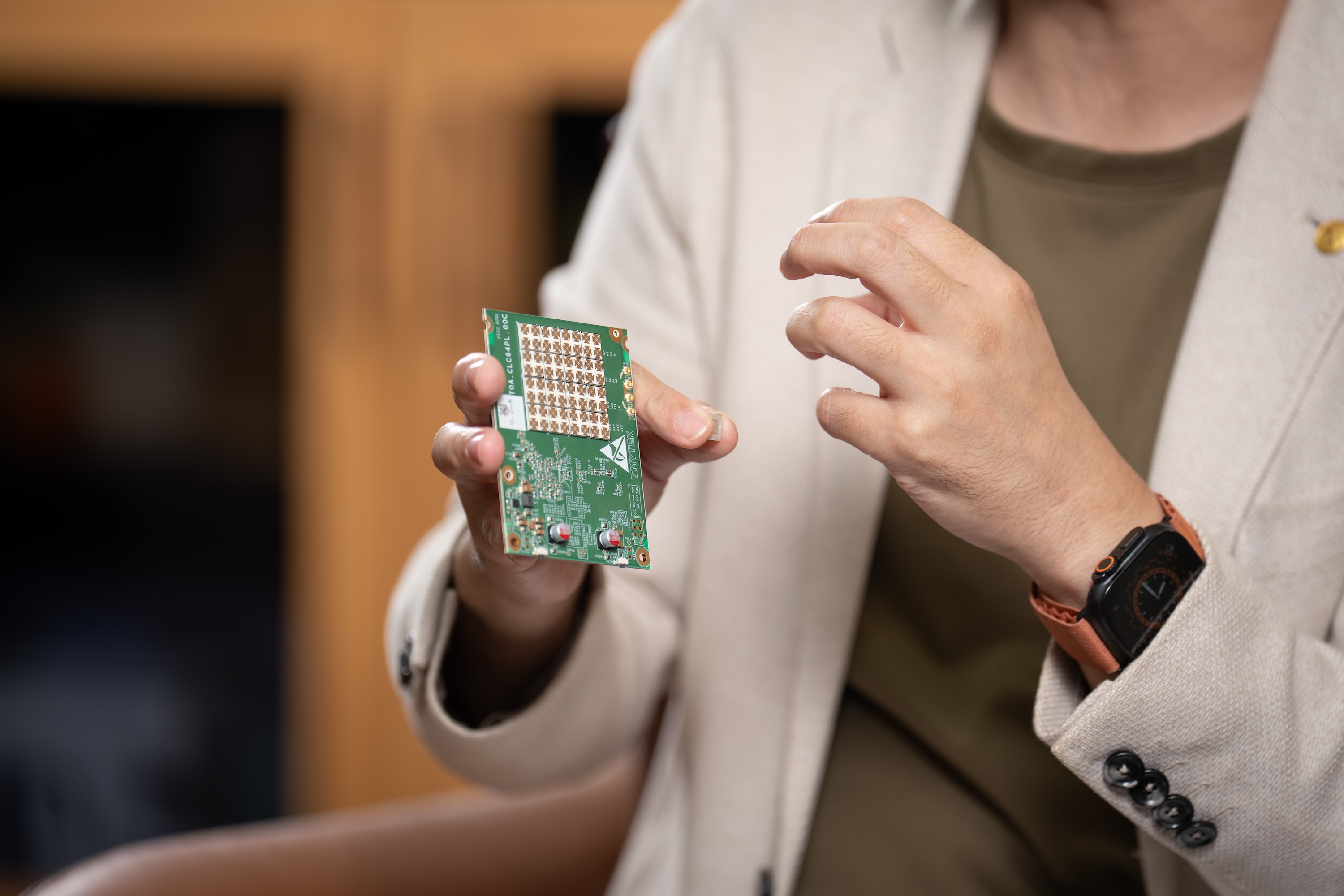
Chang compares the concept to LEGO.
A house and a car may look completely different, but both can be built from the same underlying building blocks. The same principle can apply to 5G/6G base stations, satellite terminals, and defense systems.
This approach not only shortens customers’ development cycles, but also allows multiple applications to share the same underlying modules—creating manufacturing scale and reducing costs over time.
The impact is already visible in TMYTEK’s revenue mix. Antenna modules accounted for just 5.6% of revenue in 2024, but their contribution rose to more than 30% in 2025. The company is targeting more than 50% by 2027. Scaling module production, however, brings another challenge: manufacturing processes and yield.
TMYTEK spent two to three years iterating closely with its supply-chain partners before pushing production yield above 90%.
“One of the biggest mistakes in R&D is being able to build a prototype but not being able to manufacture it at scale,” Chang says.
TMYTEK operates under a fabless, asset-light model, retaining control over its core technologies while working with manufacturing partners. By integrating Taiwan’s semiconductor manufacturing, packaging, and testing ecosystem, the company is building the capacity required for volume production.
“Why should Taiwan only be a contract manufacturer?” Chang asks.
He believes Taiwan does not necessarily need to leap directly from manufacturing into building end-consumer brands. By owning core technologies—from algorithms to packaging—and gaining greater control over product specifications, Taiwanese companies can move beyond contract manufacturing and participate more directly in product definition.
Challenge Three: Moving from Technology Validation to Delivery—and Breaking into Global Markets
When TMYTEK first participated in Taiwan’s satellite programs, Chang initially assumed that geostationary satellites might present fewer technical challenges because their orbital positions are relatively stable.
Once the team began working on the technology, however, it discovered a different level of complexity: the greater distance required larger antenna arrays and much tighter coordination.
“LEO is like asking 100 children to turn right at the same time. GEO is like asking 2,000 children to turn right simultaneously—and making sure every one of them turns at exactly the same angle.”
That validation experience ultimately became one of the keys that helped TMYTEK open the door to U.S.-based Comtech, bringing the company into the established satellite communications ecosystem.
The two companies are now jointly developing a “One-Modem One-Antenna” multi-orbit satellite terminal. Comtech provides the modem core, while TMYTEK supplies the advanced RF front end and electronically scanned array antenna.
The platform has already completed end-to-end connectivity tests with multiple in-orbit satellites and is now progressing toward commercial deployment and shipment.
The same core technologies are also being extended into 5G/6G and defense applications, including HAPS (High-Altitude Platform Station) communications and AESA radar.
TMYTEK’s FWA (Fixed Wireless Access) projects have entered field validation, while defense applications have advanced into hardware delivery and acceptance testing.
As global supply chains continue to diversify, three factors have become increasingly important in helping TMYTEK enter international customer ecosystems: its technology, Taiwan’s manufacturing capabilities, and a non-China supply chain.
“There are many things we deliberately choose not to do, because by not doing them, we create room to work with others,” Chang says.
Rather than competing with chipmakers or system companies by building complete end products, TMYTEK focuses on phased arrays and advanced RF front ends. This specialization makes its technology easier to integrate into the products and supply chains of a wide range of partners.
From Technology to Volume Production: Leveraging Taiwan’s Supply Chain to Win Global Tier-1 Customers
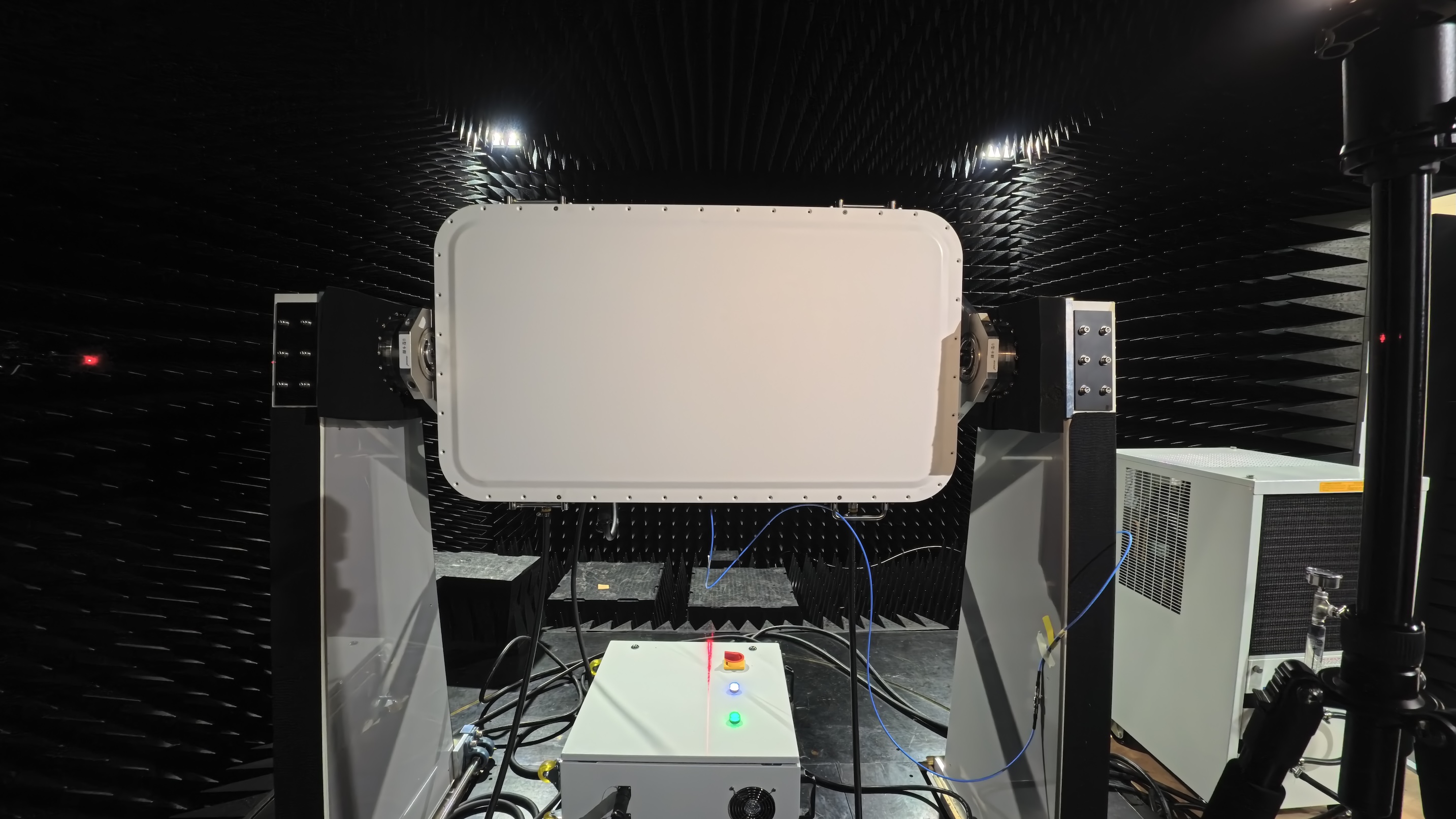
TMYTEK’s technologies have already been qualified by several Tier-1 customers. But entering the global market at scale requires more than strong technology.
International customers also evaluate manufacturing capacity, quality control, supply-chain resilience, and financial strength.
For this reason, TMYTEK views its public listing as a first step toward gaining broader recognition from the capital markets. Chang describes it as “an entry ticket to doing business at a global scale.”
Looking back on the company’s entrepreneurial journey, Chang acknowledges that TMYTEK did not arrive here by following a perfect blueprint.
Operating in markets defined by long development cycles and high technical barriers, the company chose to continue investing in R&D—first establishing itself in the global research market with mmWave test and measurement equipment, and then gradually moving phased-array modules toward volume production.
One by one, TMYTEK has worked through the technical and commercial challenges in front of it.
The company’s next task is to prove whether its dual-engine model—test and measurement equipment plus antenna modules—can combine more deeply with the manufacturing strength of Taiwan’s supply chain and open the doors to even more of the world’s leading companies.
This article is adapted from an interview featured in Business Weekly Taiwan’s MIT-U Enterprise Spotlight.
Read the full interview on Business Weekly Taiwan’s MIT-U Enterprise Spotlight: https://campaign.businessweekly.com.tw/bw/ad-260921-880